The bugs are back
Lautoka (Fiji)
It is the rainy season in Melanesia but today, as I step on the ferry to Labasa on the island of Vanua Levu, the weather is sunny.
When my eyes are adjusted to the semi-darkness in the vehicle hold, I notice, at the far end, a pretty and large Fijian young woman, seated at a small table inspecting the tickets. She is wearing a spotless white, tight overall and a shocking pink, shining new safety helmet.
I approach her and explain that I wasn't able to buy a ticket in advance because the selling point had been closed repeatedly.
With a smile she just waves me on.
I climb the stairs, throw off my backpack, and settle on a comfortable-looking couch in the near deserted lounge.
Shortly after the ferry's departure, an Indian Fijian appears and sits down next to me. We exchange a few words and I understand he is some sort of foreman in Labasa. He asks if I intend to spend the night inside the lounge. I say I do, whereupon he tells me that there are "small animals" in the furniture.
Having had more than enough encounters with bed bugs, I ask him whether he means the kind that suck your blood. To my relief he answers in the negative.
The ticket inspecting lady passes and walks up a stairway, casting a beautiful smile at us. The Indian suggests that I should get to know her better, but I decline with a laugh, pointing out our different sizes.
The Indian retreats to the top deck, saying I could join him and his mates there if I wanted.
When I get to the top deck later that evening, I find them under the starry sky, sitting around a large plastic bucket. It is filled with the local grog, a mixture of water and kava, a mildly intoxicating root.
I join them, we start chatting and I tell them that I came to Fiji for the sun and for snorkeling but that, as a result of the heavy rainfall in the last days, underwater visibility has become poor.
I also tell them about my several trips to India, which in a sense is their motherland. Indo-Fijians are the descendants of indentured workers brought to Fiji by the British as cheap labour for colonial sugarcane plantations. They started arriving in Fiji from 1879 continuing through 1920, when Britain abolished the slavery-like indenture system.
I tell them that once I was an extra in the Bollywood movie Na-Insaafi (1989), a movie that they seem to know.
Back then I stayed in the Red Shield Hostel in Bombay, run by the Salvation Army.
It was centrally located and one of the cheapest places to stay for backpackers. The daily rate even included a meal, and for these reasons the hostel was always full.
On my first evening there I heard that the place was also very popular with... bedbugs. The mattresses had recently been treated with a pesticide, but this had failed to wipe them out.
One of my room mates there, a girl from Britain, told that she figured in a Bollywood movie as a dancing girl but that she had to wear dark tights so that the bedbug bites on her legs didn't show.
She said they were looking for more westerners as extras.
I thought this could be an interesting experience, besides you got 100 rupees for the day, so next morning I put on my best shirt -matter of fact my only one- and we took a local train to some far northern part of the city, where the studios were located.
It was an interesting day indeed, the movie being the usual Bollywood circus, with lots of singing and dancing and featuring a number of dwarfs, one of which at some point remarked that "Money is expensive..."
It was a long and hot day, mostly spent in waiting, but the food was good and plenty.
Recently I found Na Insaafi on the internet and beheld my three seconds of fame. There I was, very vaguely in the background: a white, balding man sitting at a table.
After many rounds of kava in the warm night I start to feel very relaxed and drowsy and retreat to the lounge.
I fall into a deep sleep until morning, when we arrive at Vanua Levu.
Most passengers take the bus to Labasa where I am invited by my new friend to have a few more cups of kava in one of a number of shacks located at the entrance of town.
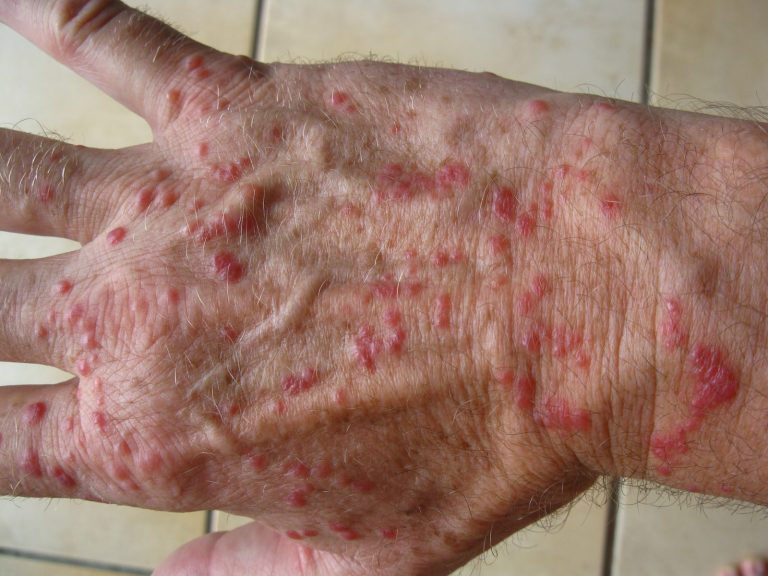
Next I take a room in a small hotel and spend the day exploring the town. The itching starts in the afternoon, becomes worse and worse and lasts all of the evening and sleepless night. When I manage to get up I look in the mirror and see my back, hands and arms covered with hundreds of bites.
I decide to spend a few days in a coastal resort nearby. It is much posher than the places where I usually stay, but I think I deserve it considering my condition.
It is a nice place indeed with a large swimming pool and home-grown organic vegetables. The owners are experienced yachties who have thrown anchor here.
I confess that I've been had by bedbugs and fortunately they don't kick me out. Bedbugs have the habit to hide in the clothes of their host, for second helpings. It would be a disaster if the property gets infested. Instead the owners make me strip and give all of my clothes and my backpack a very hot wash.
They also help me to apply freshly-picked and soothing Aloe Vera to the affected areas.
Although the bites later develop into blisters, the itching gradually recedes, as does the rain, and I am finally ready to get acquainted to the rest of the local wildlife, from a safe distance and through my goggles...
DAAR ZIJN ZE WEER
Lautoka (Fiji)
Het is het regenseizoen in Melanesië. Wanneer ik op de ferry stap naar Labasa op het eiland Vanua Levu is het daarentegen aangenaam zonnig.
Als mijn ogen gewend zijn aan het halfduister in het autoruim, ontwaar ik achterin een knappe, stevige jonge Fijische, die aan een tafeltje zit en de tickets controleert. Ze draagt een smetteloze strakke witte overall en een knalroze, blinkend nieuwe veiligheidshelm.
Ik loop er naar toe en leg haar uit dat het me niet is gelukt om van te voren een ticket te kopen, omdat het verkooppunt herhaaldelijk gesloten bleek.
Ze glimlacht slechts en wuift me verder.
Ik loop de trap op naar de bijna lege lounge, ontdoe me van mijn rugzak en neem plaats op een bank die er comfortabel uitziet.
Kort na vertrek van de boot komt er een Indiase Fijiër langs die naast me gaat zitten. We praten wat en hij vertelt dat hij een soort voorman is in Labasa.
Hij vraagt of ik van plan ben om de nacht in de lounge door te brengen. Ik antwoord bevestigend, waarop hij zegt dat er beestjes in de meubels zitten.
Ik heb enige ervaring met wandluizen dus vraag ik aan hem of het beestjes zijn die bloed zuigen. Gelukkig is dit volgens hem niet het geval.
De ticketvrouw komt langs en loopt de trap op terwijl ze vriendelijk naar ons glimlacht.
De Indiër stelt voor dat ik nader kennis met haar maak, maar ik sla zijn voorstel lachend af, wijzend op onze verschillende formaten.
Op een gegeven moment verdwijnt de Indiër naar vrienden op het bovendek, zeggend dat ik erbij kan komen als ik wil.
Later die avond neem ik de trap naar het bovendek waar ik de mannen zittend onder de blote hemel aantref rond een grote emmer met de lokale drank, een mengsel van water en kava, een wortelgewas met een licht verdovende werking.
Ik ga erbij zitten, we kletsen wat en ik vertel dat ik naar Fiji ben gekomen voor de zon en voor het snorkelen, maar dat als gevolg van de vele regen het zeewater erg troebel is.
Ik vertel ze ook over mijn verschillende reizen naar India, in zekere zin hun thuisland.
Indo-Fijiërs zijn de afstammelingen van contractarbeiders die door de Britten vanuit Zuid-India naar Fiji werden gebracht als goedkope arbeidskrachten voor koloniale suikerrietplantages. Dit gebeurde van 1879 tot 1920, toen Groot-Brittannië dit op slavernij lijkende systeem afschafte.
Ik vertel ze ook dat ik op een van mijn trips in India nog figurant ben geweest in een Bollywood-film genaamd Na Insaafi (1989). Ze schijnen die film wel te kennen.
Ik logeerde destijds in Bombay in het Red Shield Hostel, dat werd gerund door de Salvation Army.
Het was centraal gelegen en goedkoop. Bovendien was een maaltijd inbegrepen in de prijs, dus het was altijd vol met backpackers.
Op mijn eerste avond daar hoorde ik van een kamergenoot, een Brits meisje, dat het hostel ook heel populair was bij... wandluizen. Kort geleden waren de matrassen nog behandeld met een bestrijdingsmiddel, maar het was niet gelukt om de beestjes uit te roeien.
De Britse figureerde als "dancing girl" in een Bollywood-film, en moest een donkere panty dragen zodat de beten op haar benen niet te zien waren.
Ze vertelde dat men nog meer westerlingen kon gebruiken als figurant. Dat leek me wel interessant, en bovendien kreeg je 100 roepies per dag, dus de volgende dag trok ik mijn beste overhemd aan -in feite mijn enige overhemd- en namen we een lokale trein naar een ver in het noorden gelegen buitenwijk, waar zich de studio's bevonden.
Het bleek inderdaad een interessante dag. De film was het bekende Bollywood-circus: veel zang en veel dans en ook een groepje dwergen, waarvan er één op een bepaald moment opmerkte: "Money is expensive".
De dag was heet en lang met veel wachten, maar we konden ons tegoed doen aan het lekkere eten en drinken.
Onlangs vond ik de film op internet en aanschouwde ik mijn drie seconden van roem: ergens vaag op de achtergrond is, zittend aan een tafel, heel even een kalende westerling te zien.
Laat op de warme avond, na veel rondjes kava, voel ik me heel ontspannen en slaperig, en trek me terug in de lounge waar ik in een diepe slaap val.
Als we de volgende ochtend arriveren in Vanua Levu, nemen de meeste passagiers de bus naar Labasa.
Mijn nieuwe vriend nodigt me uit om nog een paar koppen kava te gebruiken in één van de houten stalletjes aan de rand van het dorp.
Daarna neem ik mijn intrek in een hotelletje en besteed de rest van de dag aan het verkennen van Labasa.
Het jeuken begint 's middags, wordt erger en erger en duurt de hele avond en de slapeloze nacht.
Wanneer het de volgende dag is gelukt om op te staan, zie ik in de spiegel dat mijn rug, armen en handen zijn bedekt met honderden beten.
Ik besluit dat ik een paar dagen ga doorbrengen in een resort aan de kust vlakbij. Meestal verblijf ik niet in dat soort dure gelegenheden, maar ik vind dat ik het ditmaal verdien in mijn toestand.
Het is inderdaad een mooie plek met een flink zwembad en zelf gekweekte biologische groenten.
Het wordt gerund door een stel ervaren zeezeilers die hier het anker hebben uitgegooid.
Ik biecht ze op dat ik te grazen ben genomen door wandluizen, en gelukkig gooien ze me er niet uit. Wandluizen hebben namelijk de gewoonte om zich te verbergen in de kleding van hun gastheer- of vrouw, voor de volgende maaltijd. Het zou een ramp zijn als ze zich over het resort zouden verspreiden.
In plaats daarvan moet ik me uitkleden en krijgen al mijn kleren en mijn rugzak een goed hete wasbeurt.
Ik word geholpen met het aanbrengen van verkoelende, vers geplukte Aloë Vera op de plekjes.
Na enige tijd worden de plekjes blaartjes, maar de jeuk wordt minder, net als de regen, en dan krijg ik de gelegenheid om de rest van de plaatselijke fauna te gaan bewonderen, op veilige afstand en door mijn duikbril.
ISRAEL 1978-1979
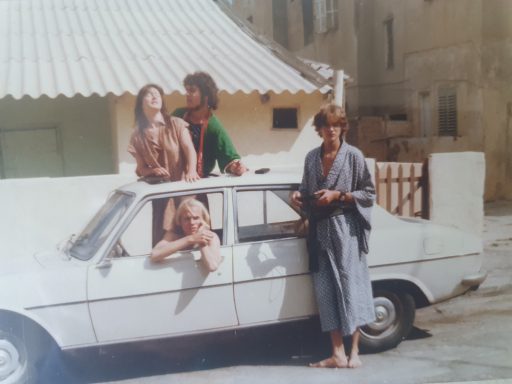
We had a great time on kibbutz Karmiyya earning one dollar a day as volunteers.
Work wasn't hard and working days weren't long.
The winter there was mild and sunny and we had a great time in the evenings sitting outside around a fire, drinking beers, smoking and listening to music such as Wish you were here.
The volunteers were young people from all over the world. There were many from Europe, mostly Northern Europe, but there were two guys from Japan as well, a guy from Nigeria and people from Australia and New Zealand. I befriended Shigeru from Japan and Mark from Denmark.
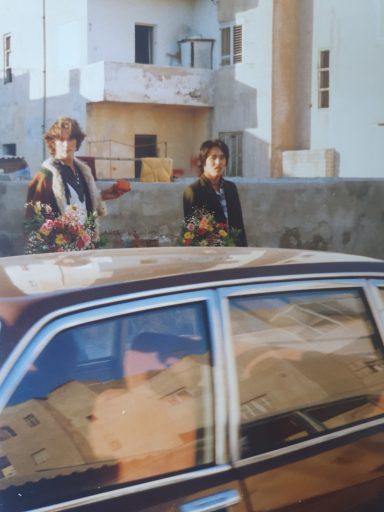
At some point Mark was kicked off the kibbutz for repeatedly showing up too late for work. Shigeru decided to go with him and they went to stay in Tel Aviv for a while. They could crash in the house of Shmulik, a friendly gay they knew. They earned some money selling flower arrangements at traffic lights on the boulevard, sometimes dressed in kimonos Shigeru had taken with him from Japan, to sell if necessary.
I visited them and stayed in the house for a few days. The house was open to anyone who needed a place to stay, and one night, in the middle of the night, a gangster type we met in the house earlier came in. We were on the floor in our sleeping bags. We woke up and he slowly pointed a pistol at each of us, every time saying: "BANG!"
One morning I discovered that two Hella yellow fog lamps had been stolen from the front of my car. I had to go all the way to the north of the city to a police station where I could report the theft. They said I had parked my car in a bad neighbourhood. I got the declaration but don't remember if I made a claim at the insurance company once I got home. In those days all imported goods such as car parts were very expensive in Israel. Which I experienced when, after driving the car through the Sinai desert, one of the shock absorbers needed to be replaced.
I could sell the car for a good price, but by the time I was ready to do so, they had changed the law, and cars of a certain age - I believe of 10 years or older- could not be imported anymore.